
South Korea Was Up 200%. So I Took A Closer Look.
What started as curiosity eventually became a trade.

South Korea Was Up 200%. So I Took A Closer Look.
What started as curiosity eventually became a trade.
Note: Fofty at Youtube described this on his Youtube Video published on May 20, 2026. Many of the images you see were borrowed from his video.
If you haven’t already, you should subscribe to Fofty.
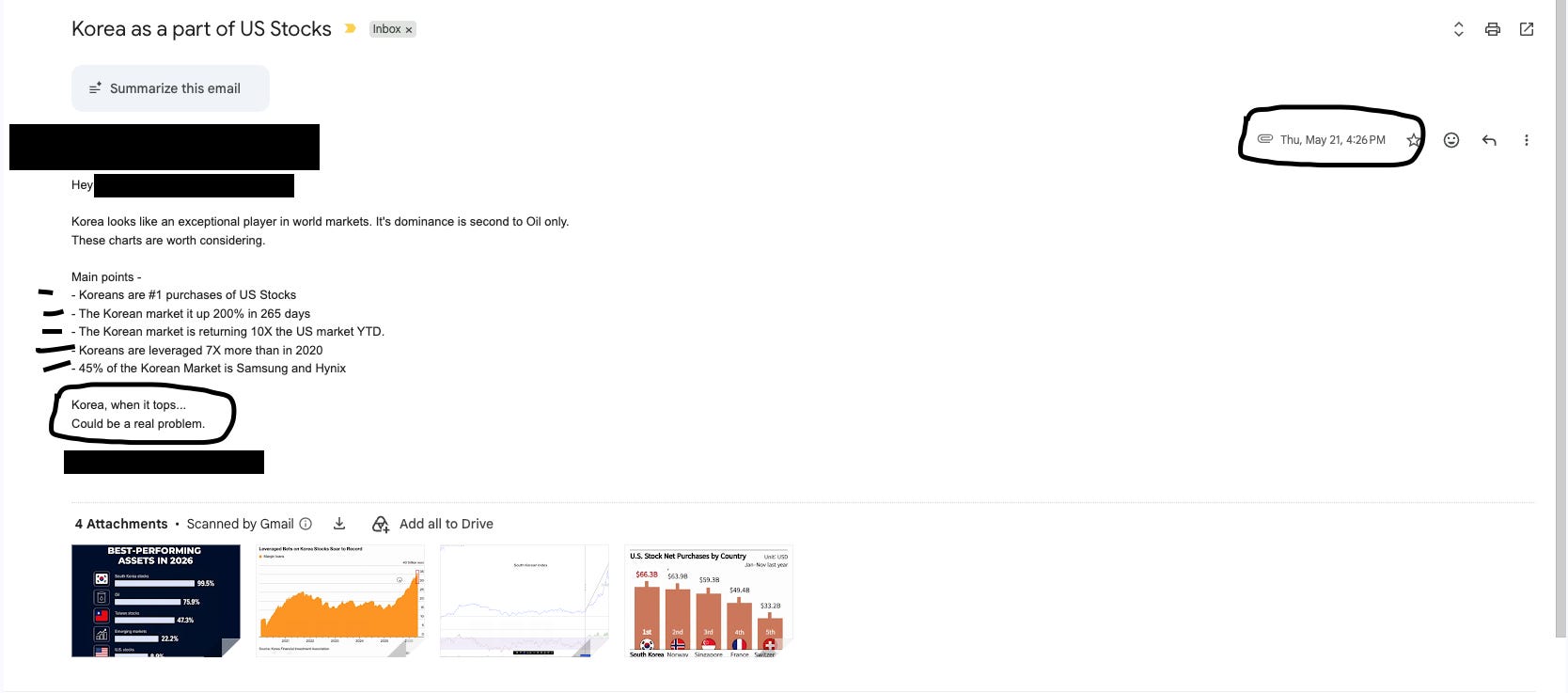
On May 21st, I sent a note to a friend who runs a hedge fund after spending a few days looking into South Korea. I wasn’t looking for a trade. I wasn’t even looking at Korea specifically. I simply came across a chart showing that the Korean stock market had rallied roughly 200% in about 265 days.
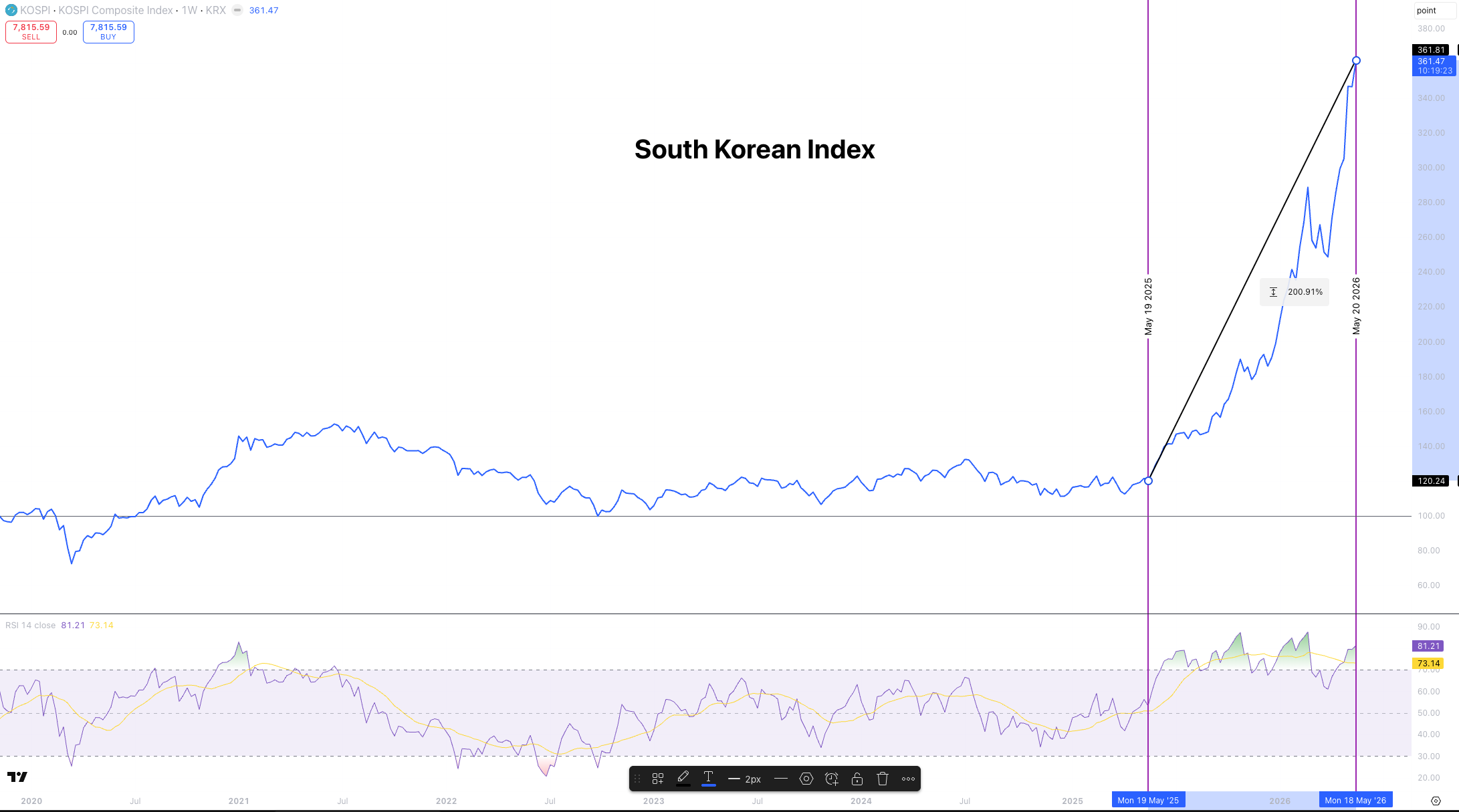
That immediately got my attention. A move like that isn’t normal.
Whenever I see a market rise that quickly, my first question isn’t whether it can keep going higher. My first question is what is causing it.
As I kept digging, I found another chart showing Korea had become one of the best-performing asset markets in the world. Most investors were focused on the United States, Nvidia, AI, and the usual stories. Meanwhile, Korea had quietly become one of the strongest markets on the planet.
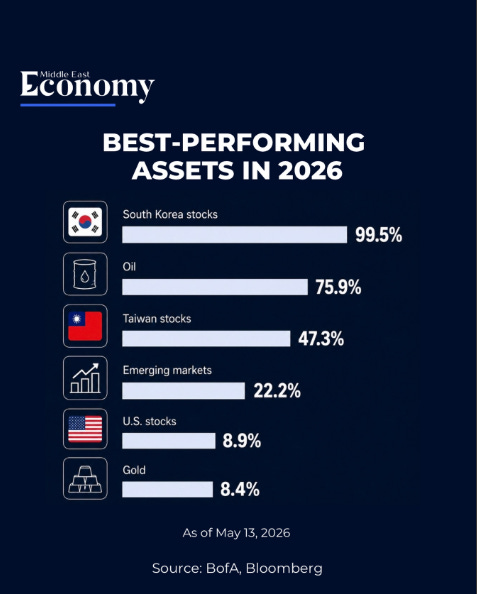
At that point I wasn’t forming an opinion. I was simply gathering information.
Strong markets exist for a reason. Sometimes the reason is fundamentals. Sometimes it’s liquidity. Sometimes it’s speculation. The challenge is figuring out which one you’re looking at. The next chart started pushing me toward an answer.
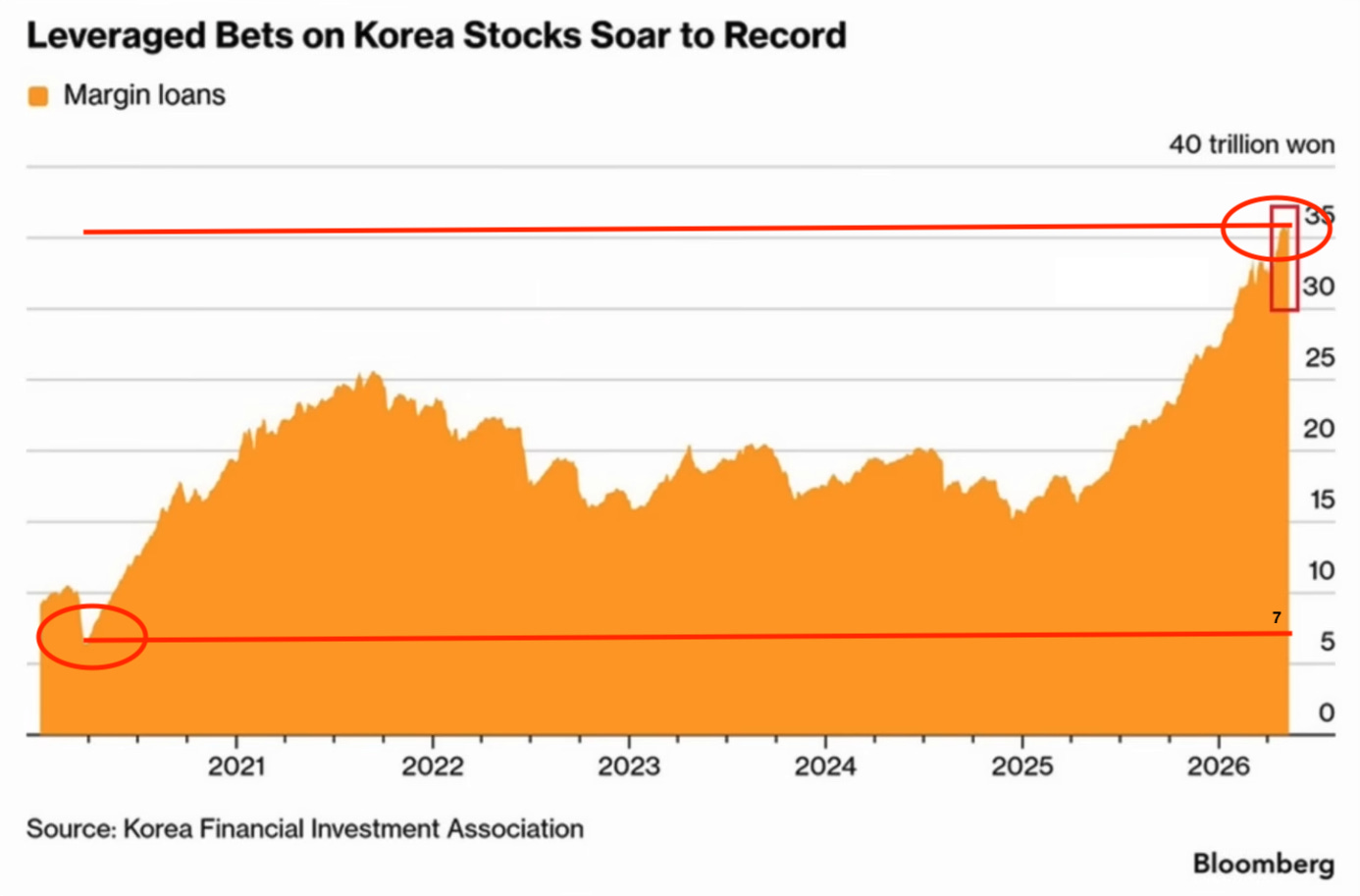
Margin debt in Korea had exploded.
Investors weren’t simply participating in the rally. They were borrowing aggressively to participate in it. Whenever leverage begins expanding alongside a rapidly rising market, I pay attention. Leverage isn’t necessarily a problem on the way up. In fact, it often helps fuel the move. The issue is what happens when the trend eventually changes.
As I continued digging, I found something I hadn’t expected.
Korean investors had become the largest foreign buyers of U.S. equities.
That surprised me. Most people think about Korea as a relatively small market compared to the United States, but here was evidence from the US Department of Treasury showing Korean investors were providing a meaningful amount of demand for stocks globally.
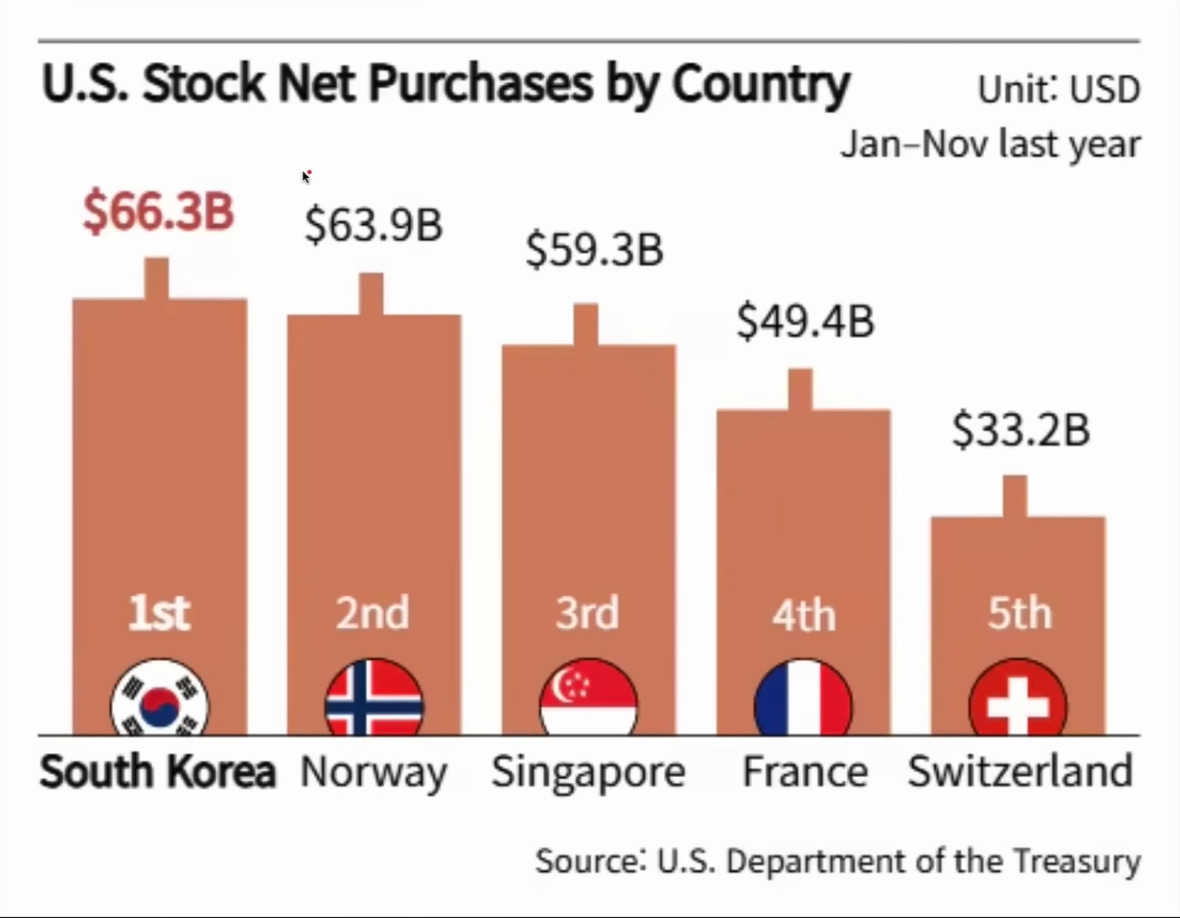
That changed how I looked at the situation.
If Korea was attracting massive amounts of speculative capital and Korean investors were simultaneously buying U.S. equities, then a reversal in Korea might not stay contained to Korea.
The final chart tied everything together.
Nearly half of the Korean market was concentrated in Samsung and SK Hynix. Now I had a market that had rallied 200%, was one of the strongest in the world, was experiencing record levels of margin borrowing, and was heavily concentrated in a small number of companies.
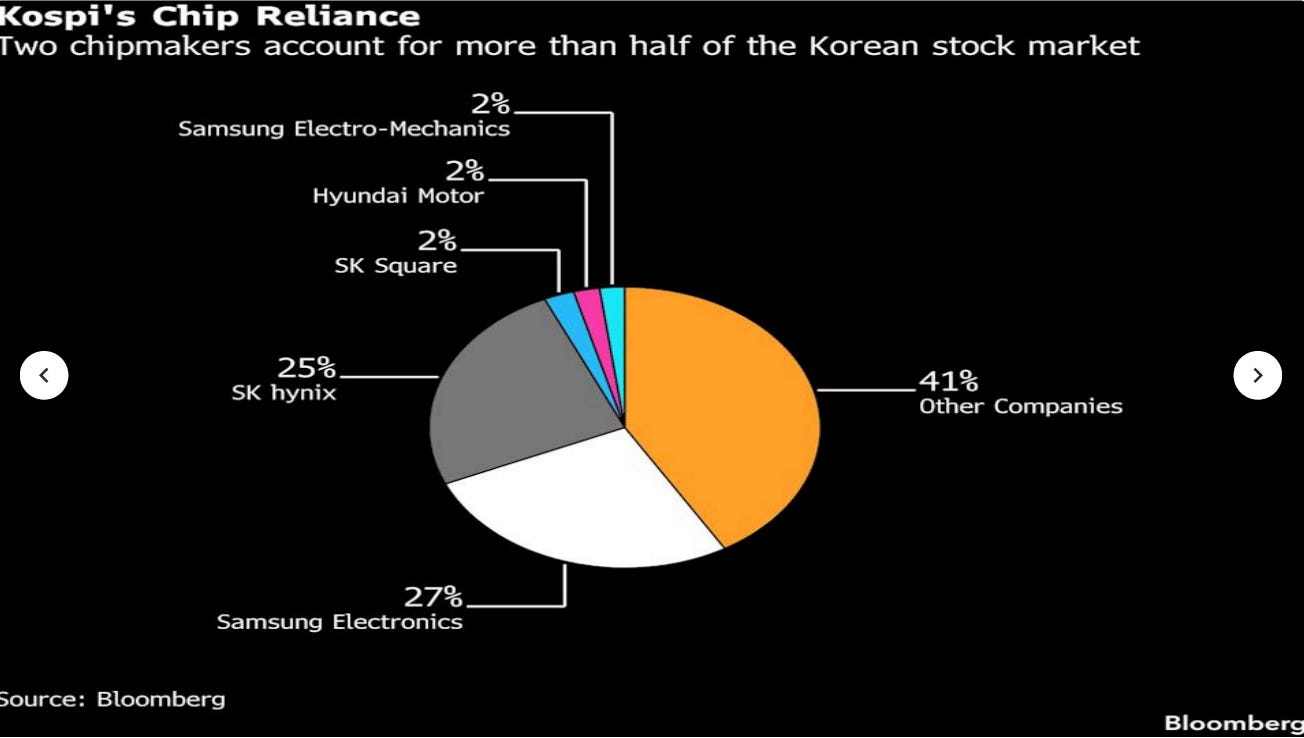
None of that meant the market had to fall. Markets can stay extended longer than most people expect. But it was enough to make me take a closer look.
That’s when I pulled up EWY, the South Korea ETF.
The chart looked exactly like I would have expected after reviewing everything else. It was a powerful trend that had become increasingly crowded. Price had gone almost straight up. The story had become obvious. And when a story becomes obvious, I start paying closer attention to the risks than the rewards.
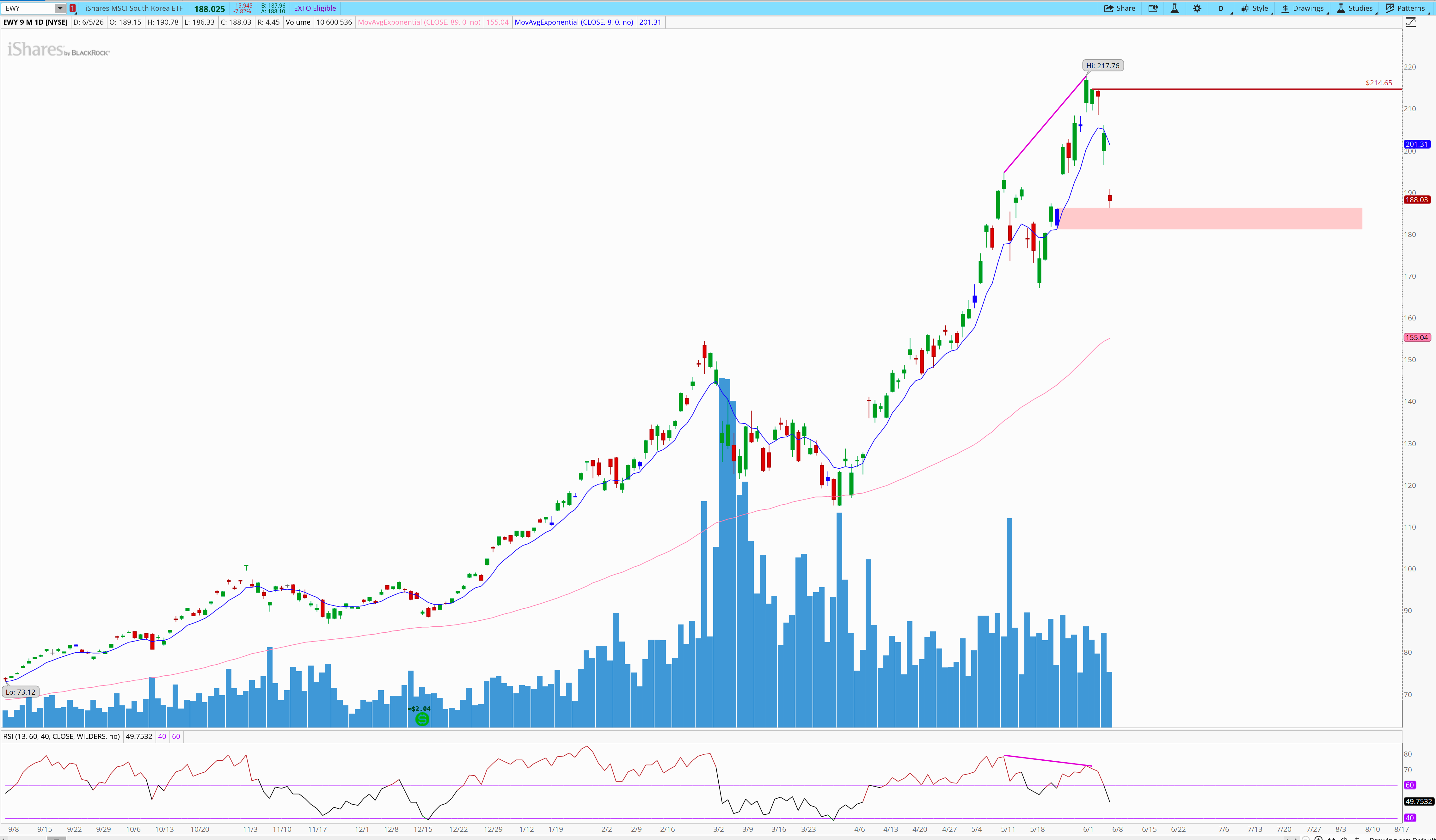
I simply wanted to see whether the behavior would continue supporting the narrative that had driven the market higher.
By earlier this week, I felt the risk-reward had shifted.
So I decided to take a trade.
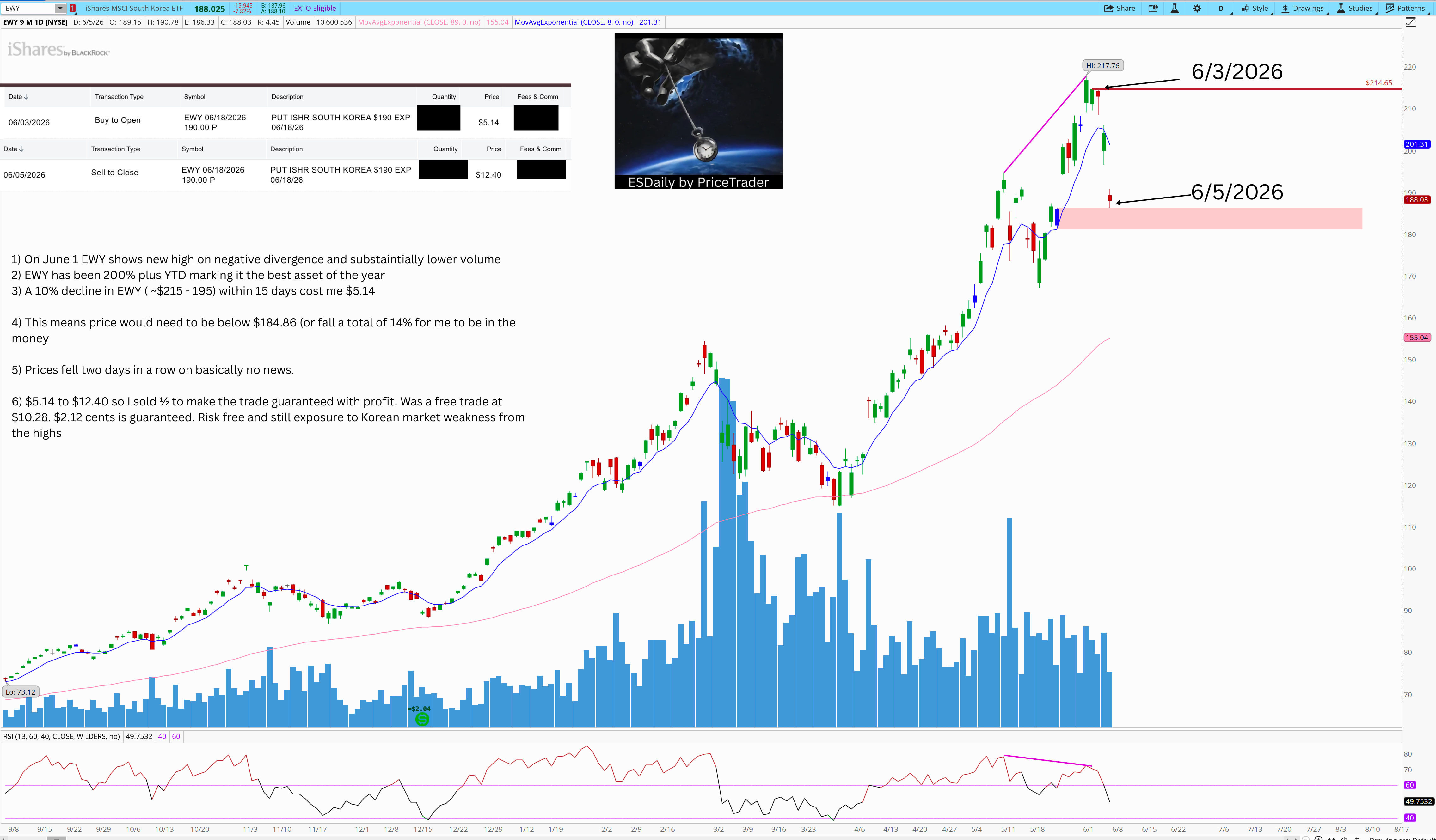
On June 3rd, I bought EWY June 190 puts for $5.14.

The trade wasn’t based on a prediction that South Korea was about to collapse.
It was based on the idea that expectations had become extremely one-sided. The market had already delivered extraordinary gains. Leverage was elevated. Participation was elevated. Optimism was elevated.
When enough things become elevated at the same time, I start looking for opportunities where a small change in sentiment can produce an outsized move in price.
Earlier this morning, I sold the position for $12.40.

The trade worked.
In two days the put’s climbed 141% and I sold 1/2 to guarantee a profit of atleast $2.12.
It started with a market that had gone up 200%. Everything else came from asking why and diving into the technicals.
When negative divergence occurs, volume dries up, momentum stops confirming price, and the risk quietly shifts from those waiting to buy to those already long….
That’s when reward can begin to outweigh risk.
For now, I wait. There are still 15 days left until expiration. If history is any guide, EWY could have much further to fall.
Maybe it does. Maybe it doesn’t.
I don’t need to predict it. The trade has already guaranteed a profit. The remaining contracts are effectively being paid for by the market.
At this point, the trade has already done what I needed it to do.
Now I simply let the market decide the rest.
-Cheers
PriceTrader
Great to see you back in markets and doing well as usual! Long overdue correction there and semis in general. Please keep them coming whenever you see favorable setups!