
When the Environment Changes — What Happens Next, April 1, 2026

There are moments where price shifts first… and then everything else catches up.
Late February into early April was one of those stretches.
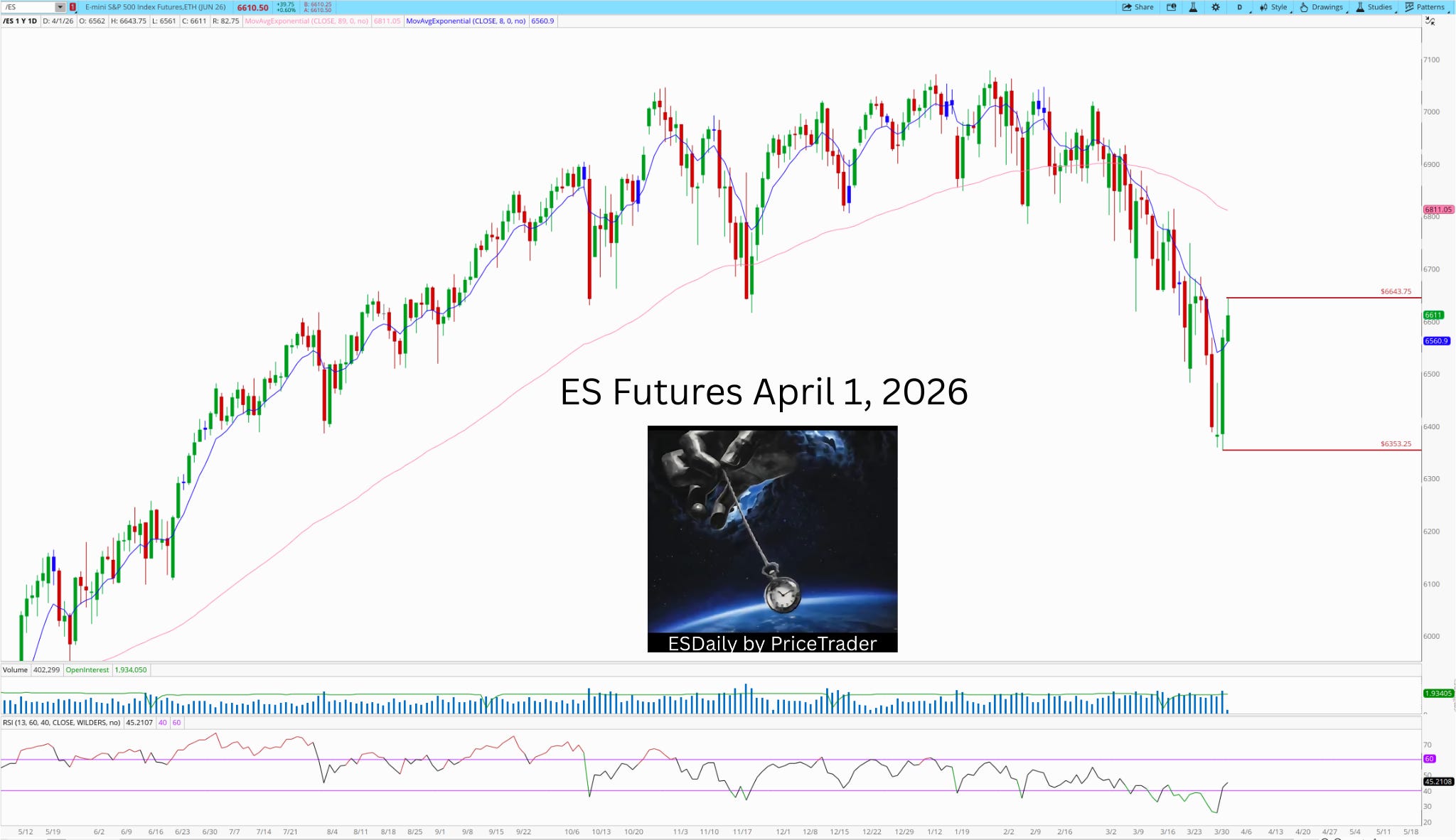
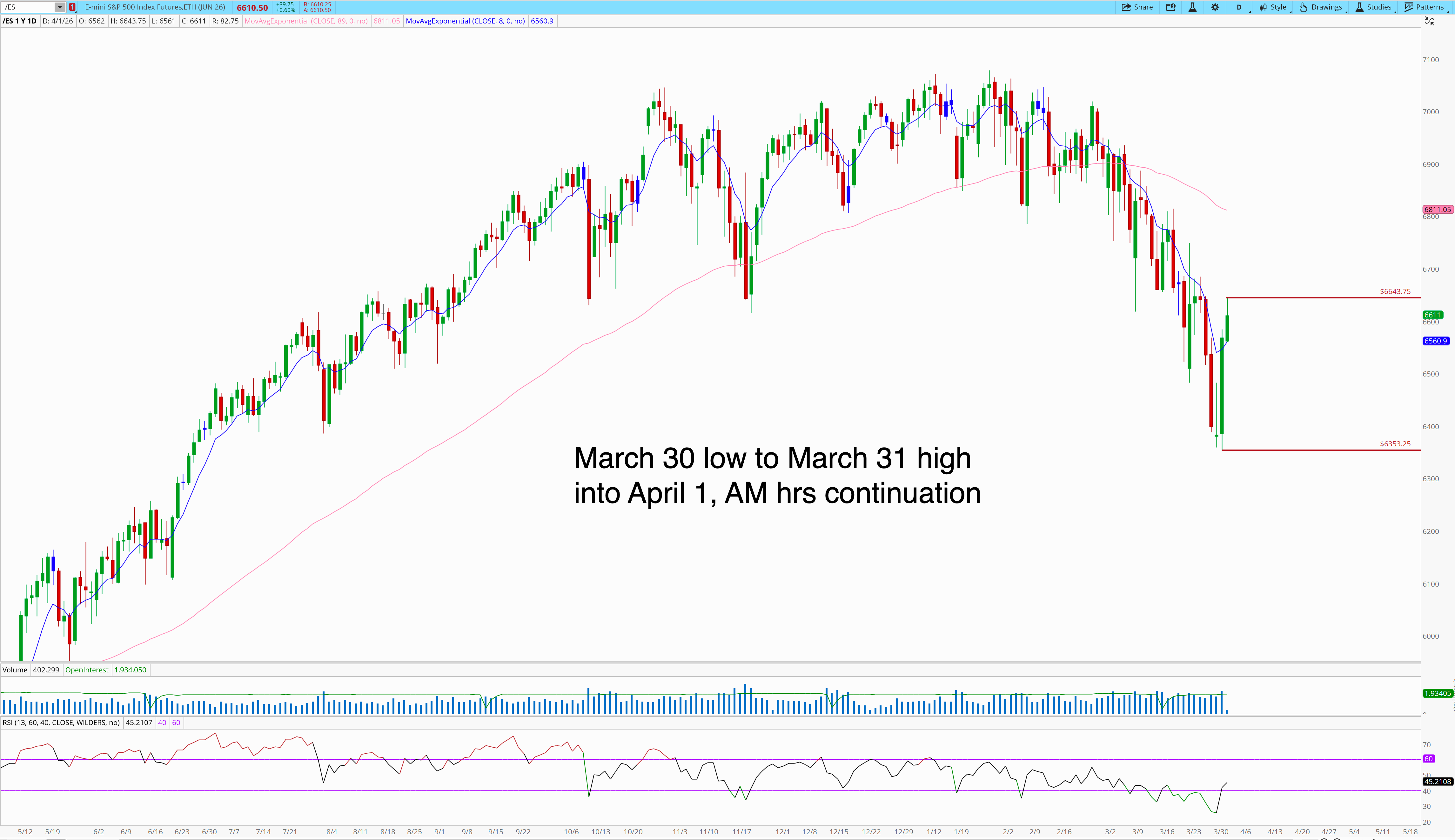
Yesterday, March 31, ES rallied from 6353 on March 30 and closed at 6567. Overnight into April 1, it traded as high as 6643.
That’s roughly a 4.5% move off the lows in less than a day.
So now the questions show up.
Is the trend over?
Did the news change things?
Is this a real reversal or just a reaction?
Those questions assume the move defines the environment.
It doesn’t.
Where This Actually Started
Go back to February 25.
Price pushed and didn’t make a new high.
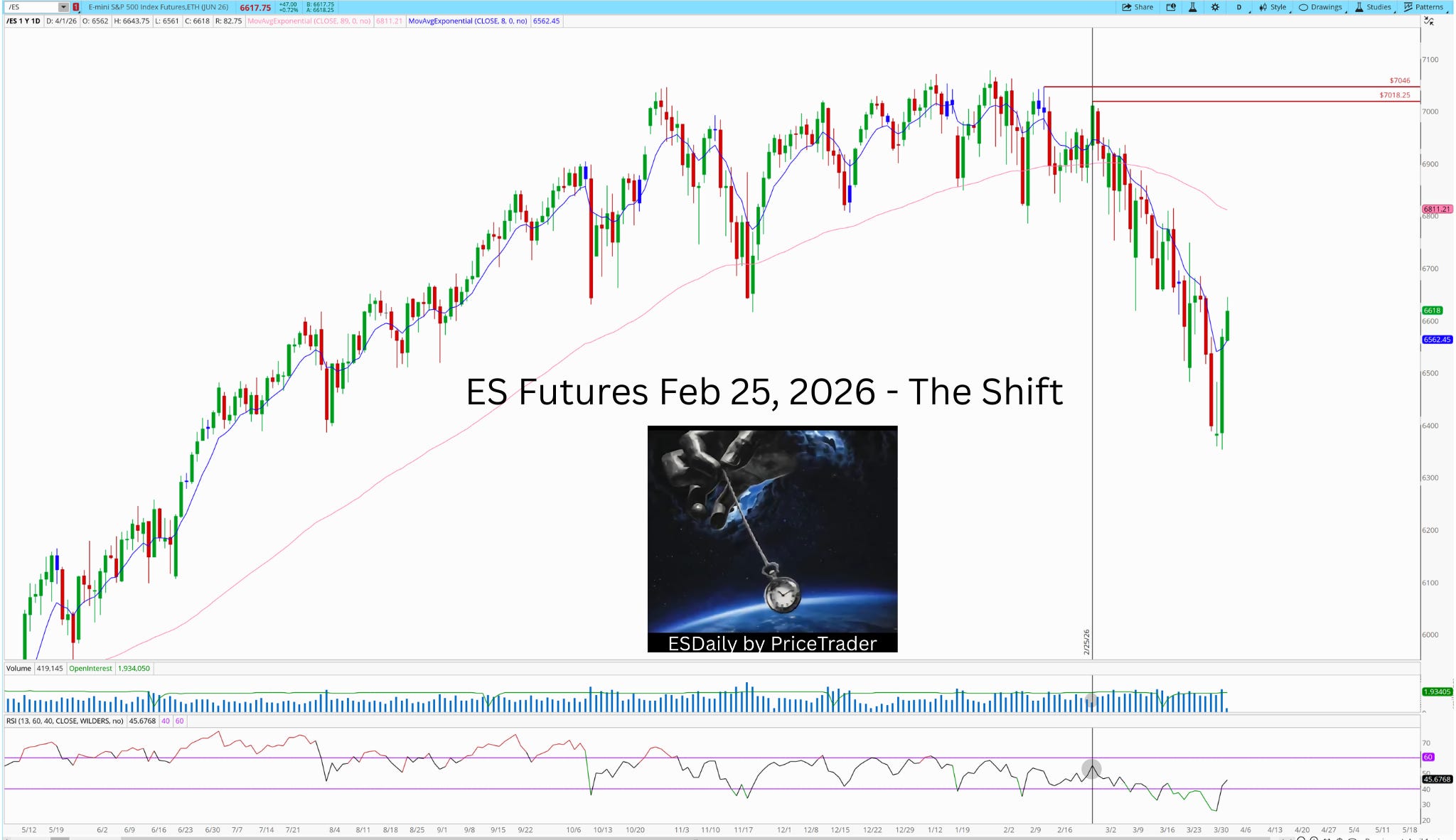
That wasn’t a signal.
It didn’t break anything.
But the behavior changed.
Up to that point, pushes were getting accepted. After that, they weren’t.
The market could still move up, but it wasn’t holding the same way.
Three days later, the war started.
That didn’t cause the change.
It sped it up.
As I write about in:
When Do Trends Change? How to Spot Reversals vs. Pullbacks in ES Futures

Note: Part 2: When Trends Change - A Look After When The Signal Occurs
As I wrote in this post:
A second lower high, where RSI stays below 60. This confirms the rally is failing to gain strength.
The failure to create a new high, with RSI confirming this weakness… thats the sign traders can look to…
March 4, the 8/89 crossed on the daily.
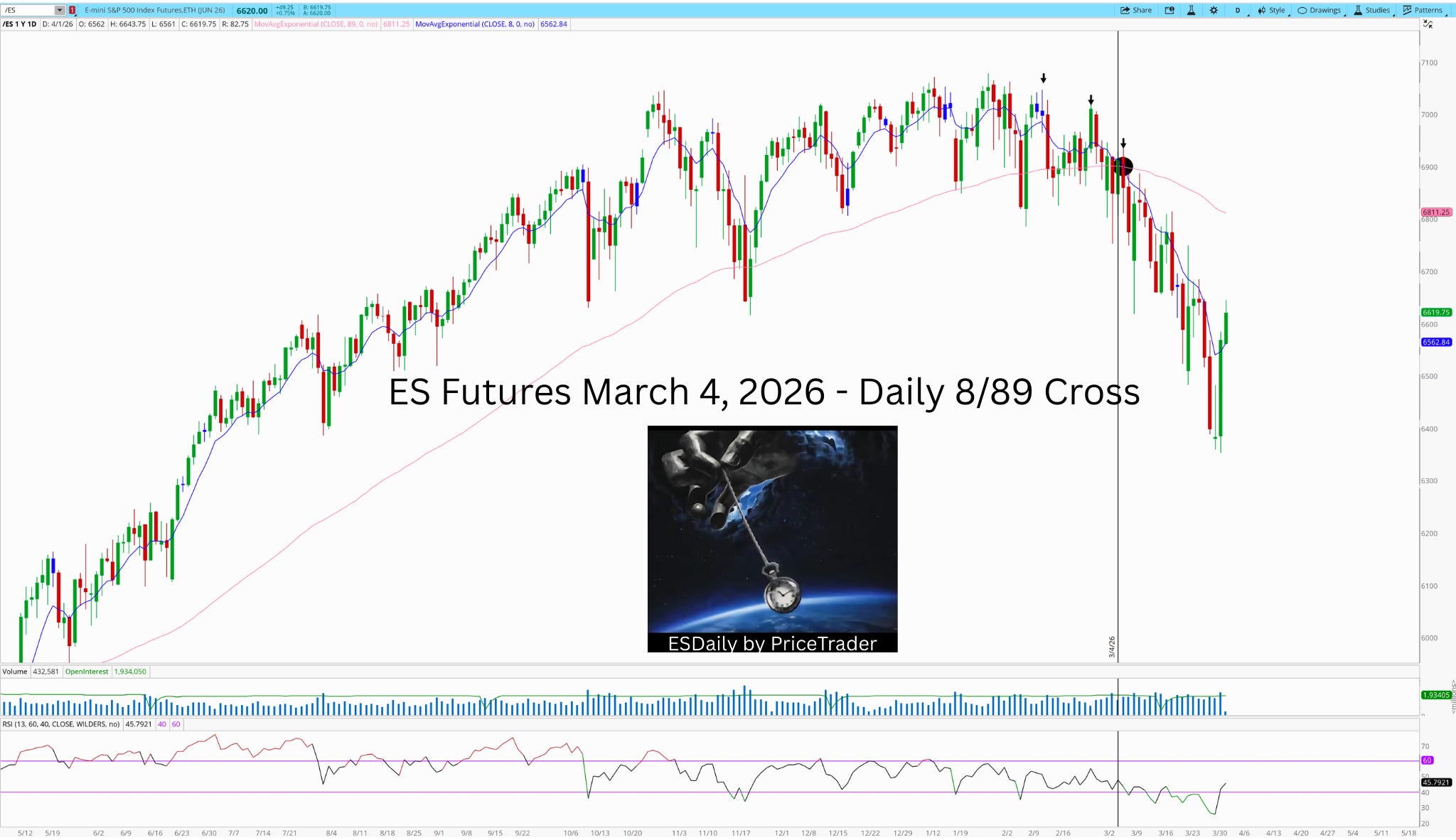
That’s not a read. That’s just what happened.
Short-term lost control.
It doesn’t depend on opinion. It’s simply a change in control. The shorter-term trend that had been driving price higher was no longer doing so.
But that alone isn’t enough. Markets don’t reverse just because a moving average crosses. They reverse when behavior confirms that the prior conditions are no longer present.
That confirmation came on March 10…. a failed breakdown of 6662 put in a low as price rallied back to the 89 EMA
Price rallied back into that area. It had an opportunity to reclaim.
In prior conditions, that type of move would have been absorbed and continued.
That’s what had been happening since the April 2025 Tariff lows…
This time it didn’t.
Price failed to reestablish itself above that zone and instead accepted below it. That’s the difference. Not the test, but the response to the test.
Once that happened, the sequence began to shift.
Lower highs started forming. Not immediately obvious, but consistent.
Lower lows followed.
Again, not necessarily aggressive, but persistent.
Reclaims that would have worked before began to fail.
Moves that should have continued stalled.
At that point, you’re no longer dealing with the same environment.
Not because of any single event, but because the market is no longer responding the same way to the same conditions.
From March 10 through the middle of the month, the defining feature wasn’t direction. It was inconsistency.
Moves extended, but they didn’t resolve cleanly.
You would get continuation attempts that lacked follow-through. You would get pullbacks that didn’t hold in a stable way. Both sides would get brief control, but neither side could maintain it.
That’s a specific type of environment.
Not trending. Not balanced.
And instability tends to show up the same way:
Moves feel larger than they should
Reactions happen faster than expected
Follow-through becomes unreliable
This is where most participants struggle.
A breakout that would have worked two weeks prior now fails. A breakdown that should have extended stalls. The same patterns exist, but the outcomes are different.
By March 25, enough of these occurrences had stacked up that the shift was clear.
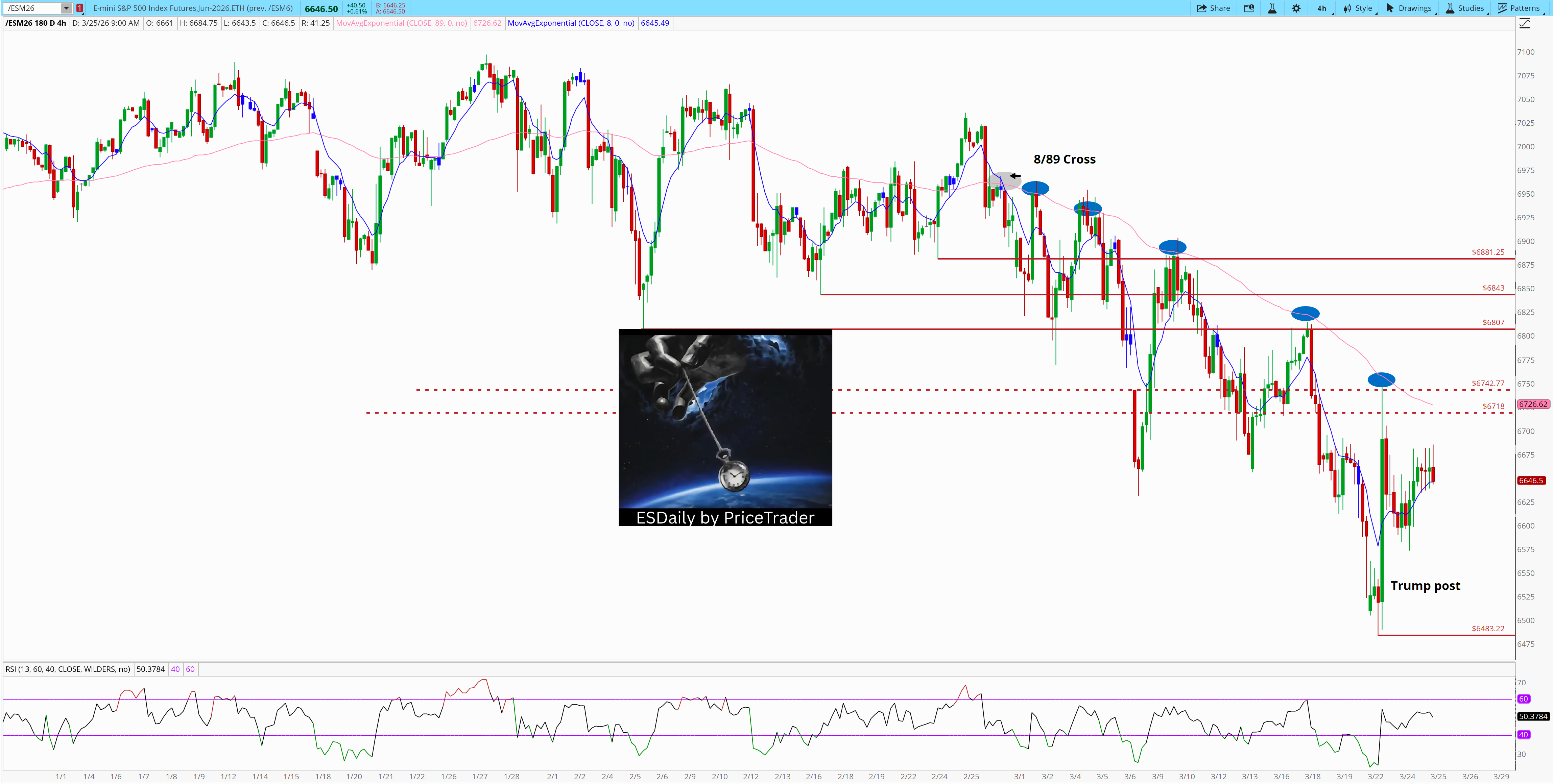
Not a call on direction. Not a prediction of what comes next. Just a recognition that the market was no longer behaving the way it had been.
During the last 10 days the environment didn’t stabilize.
It became more extreme.
By March 29–30, the market had moved far enough and fast enough that conditions became stretched.
Thats the update from March 30…
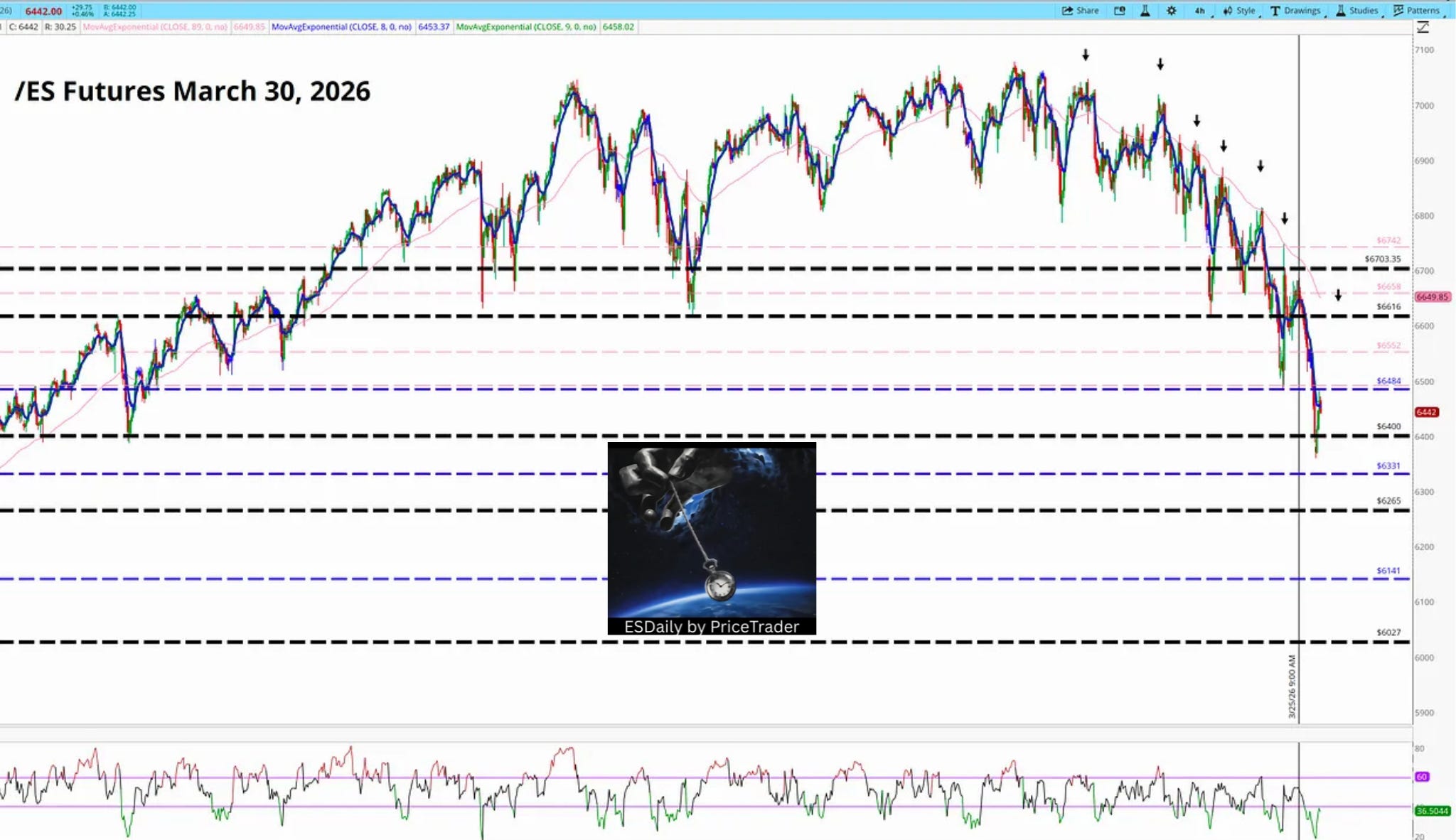
A market can be down without being stretched. And a market can be stretched without being down.
In this case, it was both.
Positioning leaned heavily in one direction.
The backdrop: war, energy prices, uncertainty….reinforced that positioning. Participants weren’t just reacting to price, they were aligning around a narrative.
That’s what creates imbalance.
And imbalance is what sets up sharp counter-moves.
Not because the underlying issue is resolved, but because too many participants are leaning the same way at the same time.
At that point, the market just needs a reason to move the other way.
Yesterday morning we got that
Secretary Hegseth’s briefing didn’t announce the end of the conflict. It didn’t resolve the underlying issues. But it changed the tone.
The message was clear:
The U.S. had control
Iranian capabilities were being degraded
Missile and drone activity was declining
Negotiations were active and progressing
That’s (apparently) enough to alter expectations.
When the message shifted toward control and potential resolution, even if incomplete, it forced a reassessment.
That’s what (seemingly) triggers repositioning.
Not new information in absolute terms, but new information relative to what was already priced in.
Yesterday’s Move
The rally that followed from 6353 March 30 low to over 6600 this AM occurred in a very short period… That move only makes sense in that context.
It wasn’t driven by new buyers stepping in with conviction about long-term value. It was driven by existing participants needing to adjust.
Shorts that had been positioned for continuation were suddenly exposed to a different set of risks. As they covered, price moved quickly.
As bottom buyers bought, this accelerated….
In an environment where liquidity is thinner and participation is reactive, those moves accelerate.
That’s why you see speed.
But speed, on its own, doesn’t indicate a change in trend.
It indicates urgency.
And urgency is usually tied to positioning, not structure.
After that move, the question becomes whether anything materially changed.
From a structural standpoint, it hasn’t.
The sequence of lower highs remains intact.
Price has not yet broken above the levels that would invalidate that sequence.
The sequence of lower lows also remains intact.
One rally, even a large one, doesn’t erase that pattern.
More importantly, the market has not demonstrated sustained acceptance at higher levels.
It has moved there. That’s not the same thing.
Momentum provides a clean way to view this.
On the daily timeframe, RSI had been operating below 40, consistent with a weaker environment. After a nearly 4.5% rally, RSI has only just moved back above that threshold.
That tells you something about the underlying strength of the move. In stronger environments, RSI doesn’t need a move of that magnitude to recover. It holds higher levels more consistently. Here, it required an outsized move just to return to neutral territory.
That suggests the underlying pressure hasn’t been fully resolved.
At this stage, the market is dealing with competing forces.
On one side, you have the potential for improving conditions:
A narrative of control rather than escalation
The possibility of a negotiated outcome
Reduced immediate uncertainty
On the other side, you have existing structure:
A broken sequence of price behavior
Weak momentum characteristics
Lack of consistent acceptance at higher levels
These don’t resolve immediately.
That’s why volatility remains elevated.
What Matters Going Forward
From here, the focus shifts away from the initial move and toward what follows it. The rally itself doesn’t confirm anything. It sets the stage.
What matters is whether the market can build on it.
There are a few things that need to be observed:
First, whether price can hold higher levels. A move up is one thing. The ability to maintain those levels without immediate reversal is another.
Second, how pullbacks behave. In a stronger environment, pullbacks tend to be contained. They are bought relatively quickly, and they don’t retrace large portions of the prior move. If pullbacks become deeper or more prolonged, that suggests the rally lacks underlying support.
Third, whether momentum improves in a sustained way. If RSI and similar measures can remain elevated without requiring extreme moves, that indicates a shift in behavior.
If they cannot, then the environment has not materially changed.
Major Levels I’m watching:
📊 Likely Supports for April 1 into Easter Holiday
High-Priority: 6555–6567, 6473–6480, 6353
Medium-Priority: 6500–6510, 6420–6435
📈 Likely Resistances for April 1 into Easter Holiday
High-Priority: 6640–6662, 6708–6723, 6800–6820
Medium-Priority: 6675, 6750
It’s hard to deny a 3% move. The move off the lows was real. The catalyst behind it was real, as far as following a headline goes….
But neither of those, on their own, redefine the environment. They don’t change trends.
Until that occurs, the most likely interpretation is that this is a rally within a broader correction.
If that changes, it will become evident through the same process that identified the shift in the first place.
We’ll be able to see it on the chart… Not through headlines… Not through isolated moves.
But through consistent changes in how price behaves over time.
Cheers,
PriceTrader